

Your healthcare and wellness news reporter
Provided by AGP
Can People With Diabetes Receive Dental Implants? Memphis Specialist Explains Key Health Factors
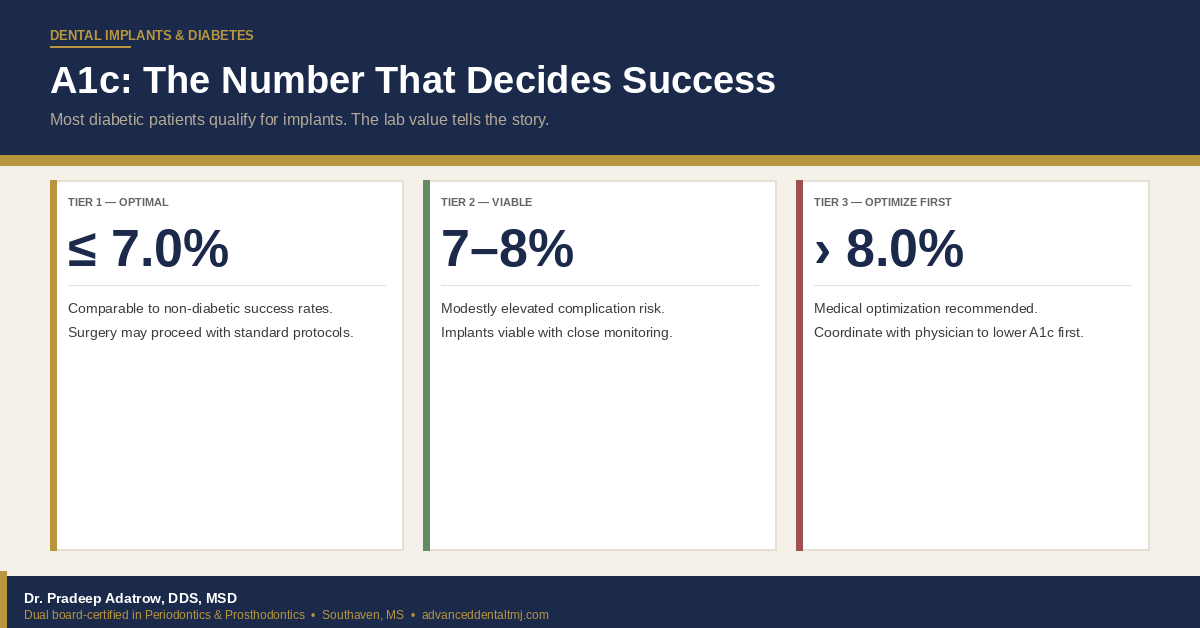
Most diabetic patients qualify for dental implants. Dr. Pradeep Adatrow, Midsouth's only dual board-certified dental specialist, explains the A1c threshold that determines implant eligibility
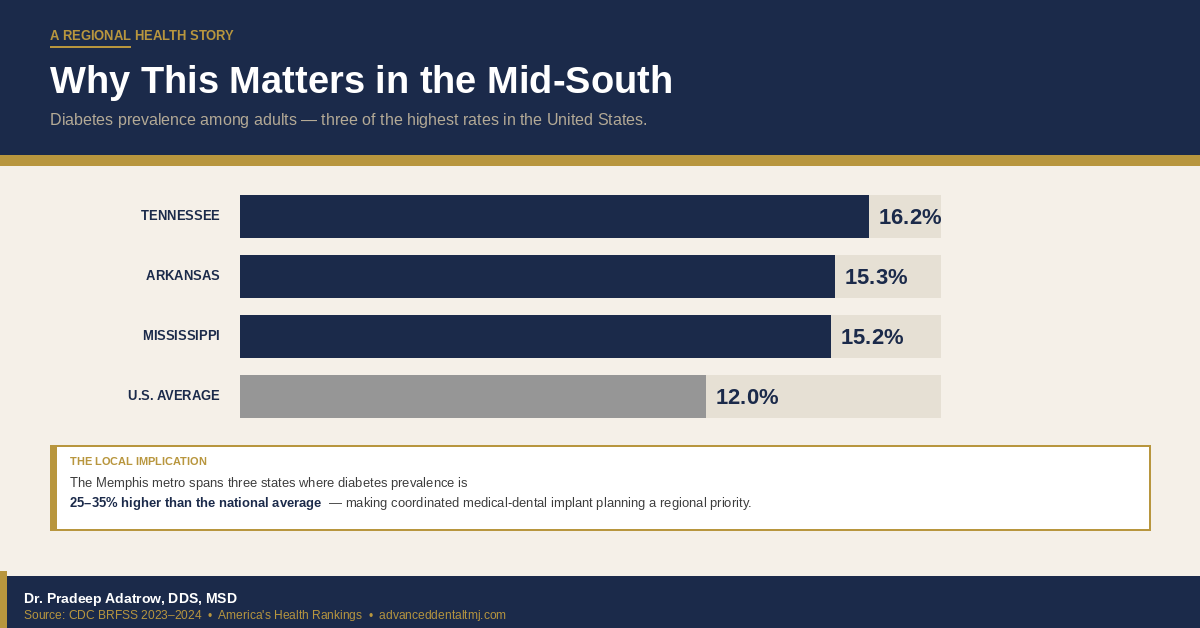
Tennessee, Arkansas, and Mississippi rank among the highest states for adult diabetes prevalence — 25 to 35% above the national average — making dental implant planning a regional public health priority
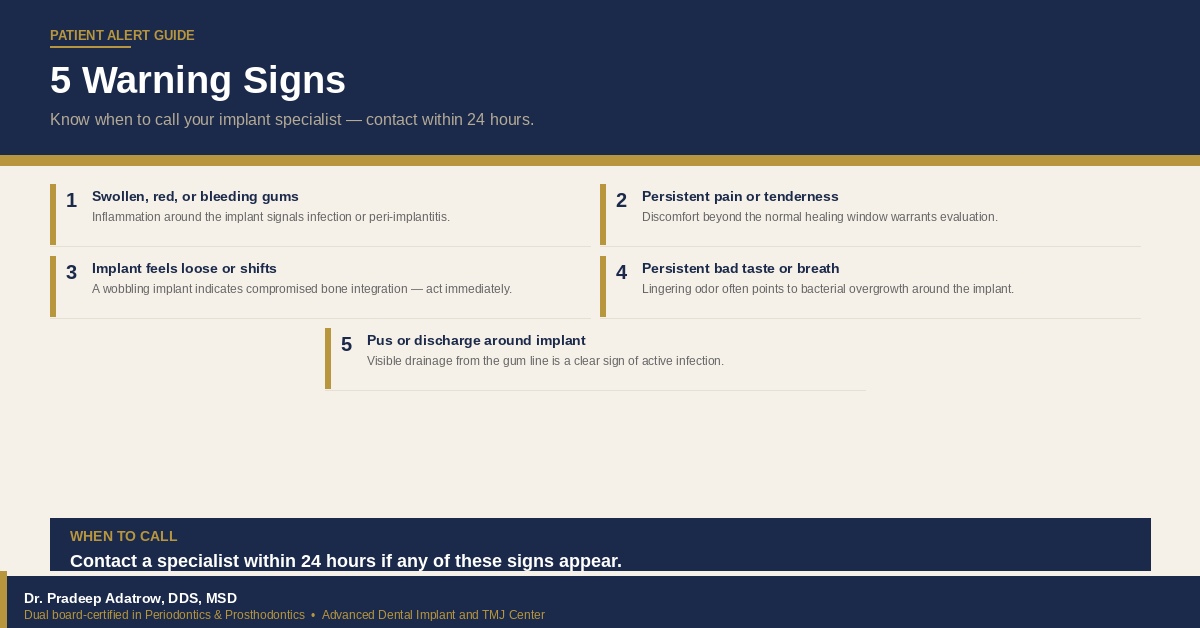
Five warning signs after dental implant placement that require contacting a specialist within 24 hours — a patient alert guide from Dr. Pradeep Adatrow, Advanced Dental Implant and TMJ Center
Dr. Adatrow reveals the A1c threshold that determines dental implant eligibility for diabetic patients in Memphis and the Mid-South
Diabetes is not a disqualifier — uncontrolled diabetes is. Patients with an A1c at or below 7% can expect implant success rates virtually identical to non-diabetic patients”
SOUTHAVEN, MS, UNITED STATES, May 14, 2026 /EINPresswire.com/ -- For the more than 38 million Americans living with diabetes, missing teeth often come with an extra dose of bad news: many are told outright that dental implants are off the table. New patient guidance released this week by Dr. Pradeep Adatrow — the only dual board-certified periodontist and prosthodontist in the southern United States, serving the greater Memphis metropolitan area — challenges that assumption with clear, evidence-based criteria showing most diabetic patients can qualify for successful implant treatment.— Dr Pradeep Adatrow
The deciding factor is not a diabetes diagnosis itself, but a single laboratory value: HbA1c, the blood test that reflects average blood sugar control over the previous two to three months.
“Diabetes is not a disqualifier — uncontrolled diabetes is. Patients with an A1c at or below 7% can expect implant success rates virtually identical to non-diabetic patients. The conversation we should be having is not whether someone with diabetes can get implants, but how we partner with their physician to get them ready.”
— Dr. Pradeep Adatrow, DDS, MSD
THE A1C THRESHOLD THAT DETERMINES ELIGIBILITY
Drawing on more than 30 years of clinical experience and over 25,000 implants placed, Dr. Adatrow’s newly released patient education guide outlines three categories that determine implant candidacy:
1. A1c at or below 7% — implant success rates are nearly equivalent to non-diabetic patients.
2. A1c between 7% and 8% — implants remain viable, but complication risk rises modestly.
3. A1c above 8% — surgical risk and failure rates climb significantly; medical optimization is recommended before proceeding.
Elevated blood sugar slows post-surgical healing, weakens bone support around the implant, reduces blood flow to the gums and jaw, and increases susceptibility to peri-implantitis — the inflammatory condition responsible for most late-stage implant failures.
A PUBLIC HEALTH GAP IN THE MID-SOUTH
Mississippi and Tennessee consistently rank among the highest states in the country for diabetes prevalence, making the Memphis metropolitan area a region where the intersection of diabetes and tooth loss is particularly acute. Thousands of patients are walking away from implant consultations without a clear understanding of what is possible.
“I see patients every week who were told they could never have implants because of their diabetes. The science has moved. The protocols have moved. Patients deserve an updated answer.”
— Dr. Pradeep Adatrow
WARNING SIGNS AND THE MEDICAL-DENTAL PARTNERSHIP
The guide equips diabetic patients to recognize early warning signs after implant placement — including persistent swelling or bleeding around the implant, lingering pain, looseness, persistent bad taste or breath, and discharge — any of which warrants prompt evaluation. Early intervention can often save an implant that would otherwise be lost.
The guidance calls for direct communication between a patient’s physician and dental specialist to optimize blood sugar, adjust medications when needed, and align on antibiotic and follow-up protocols. The American Diabetes Association recommends at least one annual dental visit for every patient with diabetes — a benchmark Dr. Adatrow describes as “a floor, not a ceiling.”
SEVEN STEPS FOR IMPLANT SUCCESS WITH DIABETES
1. Maintain tight blood sugar control and meet the A1c target established by a physician prior to surgery.
2. Disclose the diabetes diagnosis, current medications, and most recent A1c results to the dental team before treatment begins.
3. Brush twice daily, floss daily, and use an antiseptic mouthwash as recommended by the dental provider.
4. Attend every scheduled follow-up appointment — early detection of complications is decisive for implant survival.
5. Stop smoking; the combination of diabetes and tobacco use dramatically raises implant failure risk.
6. Follow a balanced diet that supports glucose stability and promotes tissue healing after surgery.
7. Take all prescribed antibiotics exactly as directed, both before and after the surgical procedure.
THE BOTTOM LINE
Diabetes increases the complexity of implant treatment — but it does not eliminate it. With disciplined blood sugar control, rigorous oral hygiene, and coordinated medical and dental management, implants remain a safe, durable, and life-changing option for most diabetic patients.
The full patient education guide is available to Memphis-area patients and referring physicians through the Advanced Dental Implant and TMJ Center at https://www.advanceddentaltmj.com
ABOUT DR. PRADEEP ADATROW
Dr. Pradeep Adatrow, DDS, MSD, is the only dual board-certified specialist in Periodontics and Prosthodontics in the southern United States, with 30 years of clinical experience and over 25,000 implants placed. Voted Desoto’s Best Dentist seven years in a row and selected as the Face of Dental Implants seven consecutive years, he is the founder of the Advanced Dental Implant and TMJ Center in Southaven, Mississippi, co-founder of OralVue AI, and founder of the Smile Again charitable dental organization.
ABOUT ADVANCED DENTAL IMPLANT AND TMJ CENTER
Advanced Dental Implant and TMJ Center is a specialty practice in Southaven, Mississippi, dedicated to implant dentistry, full-arch restoration, and periodontal care for patients across the Memphis metro and Mid-South region. The practice has been voted Memphis’s Best Oral Surgeon and Top Dentist five years running.
MEDIA CONTACT
Advanced Dental Implant and TMJ Center
Dr. Pradeep Adatrow, DDS, MSD
Southaven, Mississippi
Phone: 662-655-4868
Email: info@adatmj.com
Website: https://www.advanceddentaltmj.com
Pradeep Adatrow
Advanced Dental Implant and TMJ Center
+1 662-655-4868
email us here
Visit us on social media:
LinkedIn
Instagram
Facebook
YouTube
TikTok
X
Legal Disclaimer:
EIN Presswire provides this news content "as is" without warranty of any kind. We do not accept any responsibility or liability for the accuracy, content, images, videos, licenses, completeness, legality, or reliability of the information contained in this article. If you have any complaints or copyright issues related to this article, kindly contact the author above.
