

Gene Therapy Market to reach USD 41.63 Billion by 2035 at 19.04% CAGR
Gene Therapy Market,
Gene Therapy Market to Surge from USD 7.285 Bn in 2025 to USD 41.63 Bn by 2035—Driven by Rising Prevalence of Genetic Disorders, Regulatory Streamlining
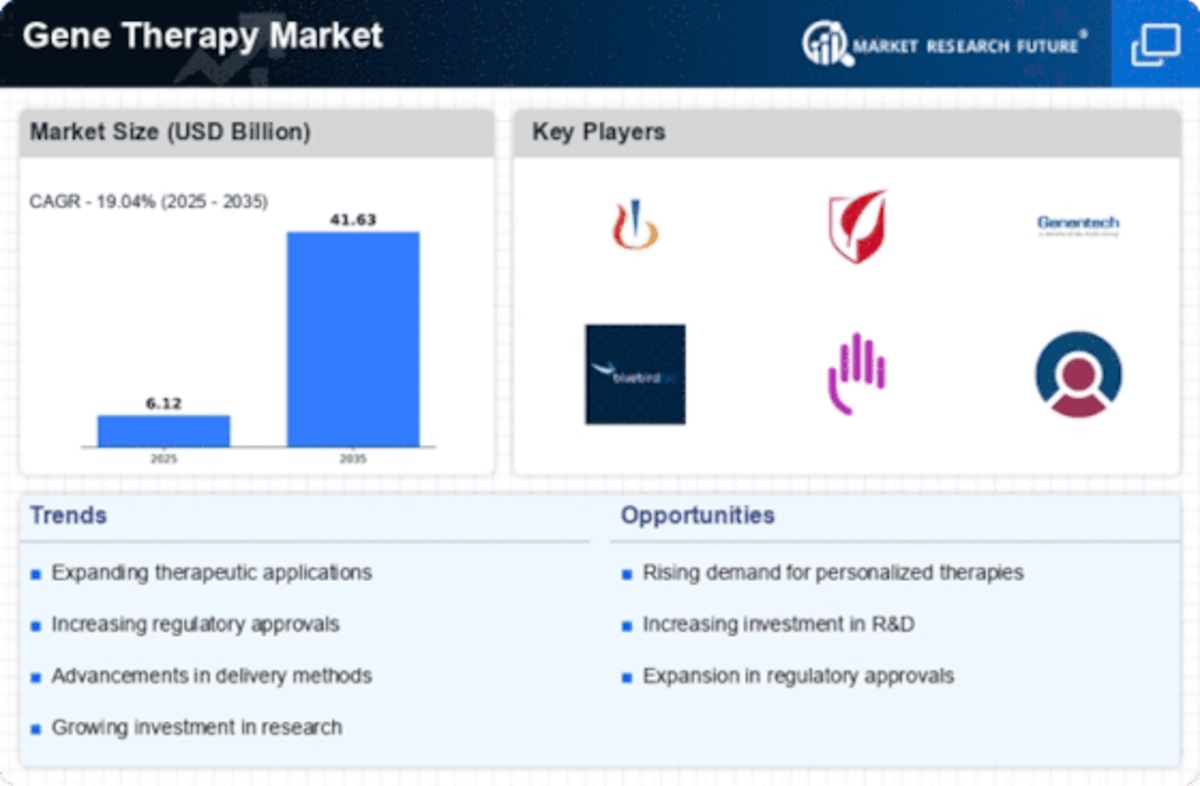
NY, CA, UNITED STATES, August 31, 2026 /EINPresswire.com/ -- As per Market Research Future, the global Gene Therapy Market size was valued at USD 6.12 Billion in 2024, and is projected to grow from USD 7.285 Billion in 2025 to USD 41.63 Billion by 2035, registering a CAGR of 19.04% during the forecast period 2025–2035.The 19.04% CAGR—anchored by transformative shifts in precision medicine—is propelled by three converging forces: the rising global prevalence of genetic and chronic disorders, with the World Health Organization noting that noncommunicable diseases account for approximately 41 million deaths annually worldwide, driving healthcare providers to increasingly adopt gene-based treatments for previously untreatable conditions; advancements in vector engineering and gene editing technologies, particularly CRISPR-Cas9, TALENs, and next-generation viral vectors, which significantly improve delivery precision, safety profiles, and therapeutic durability; and regulatory momentum, with agencies such as the FDA and EMA streamlining approval pathways through fast-track designations and priority review, accelerating patient access to one-time curative therapies.
Global pharmaceutical and biotechnology companies are amplifying this momentum. Novartis continues to lead with its Zolgensma franchise for spinal muscular atrophy and expanded gene therapy manufacturing capabilities in Switzerland. Gilead Sciences, through Kite Pharma, has advanced cell therapy capabilities with Yescarta receiving multiple global regulatory approvals. Spark Therapeutics pioneered the field with Luxturna, the first FDA-approved gene therapy for an inherited retinal disease. Bluebird bio secured FDA approval for Lyfgenia in sickle cell disease, while CRISPR Therapeutics and Sangamo Therapeutics are pushing the boundaries of gene editing. According to CDC data, millions of people in the United States are affected by chronic and genetic-related health conditions, and approximately 1 in 1,500 individuals are affected by hemophilia alone. These forces are creating the clinical infrastructure and patient demand on which the Gene Therapy Market depends.
Request A Free Sample:
https://www.marketresearchfuture.com/sample_request/8399
Key Market Trends & Growth Drivers
Rising Prevalence of Genetic Disorders
The market is witnessing increasing demand driven by the growing incidence of genetic and chronic diseases. Conditions such as hemophilia, muscular dystrophy, cystic fibrosis, and sickle cell disease are becoming more prevalent, necessitating innovative treatment options. According to recent estimates, approximately 1 in 1,500 individuals are affected by hemophilia, highlighting the urgent need for effective therapies. This trend indicates a shift in healthcare paradigms toward one-time curative interventions, with gene therapies being recognized for their potential to provide long-lasting solutions where traditional treatments fall short. Novartis continues advancing product development through next-generation gene therapy platforms while strengthening strategic partnerships supporting rare disease research.
Technological Advancements in Gene Editing
Innovations in gene editing and vector delivery are becoming a hallmark of the industry. CRISPR-Cas9, TALENs, and next-generation viral vectors such as AAV and lentiviral systems enable precise modifications to genetic material, enhancing both efficacy and safety. These advancements aim to improve targeting accuracy and reduce off-target effects, potentially leading to better patient outcomes and increased market penetration. Viral vectors accounted for approximately 65% of market revenue in 2024, driven by efficient gene delivery capabilities, while non-viral vectors are gaining traction for their safety and scalability advantages. Spark Therapeutics continues expanding personalized gene therapy solutions through targeted genetic medicines focused on addressing specific patient mutations.
Regulatory Support and Streamlined Approvals
The incorporation of adaptive regulatory frameworks into the industry is gaining traction. Agencies such as the FDA and EMA are implementing fast-track designations, priority review pathways, and Advanced Therapy Medicinal Products (ATMP) guidelines to expedite gene therapy approvals. These tools are being utilized to reduce development timelines and facilitate communication between sponsors and regulators, enhancing treatment access. Gilead Sciences has enhanced its gene therapy portfolio through strategic acquisitions and regulatory progress, with Yescarta receiving multiple global approvals. The European Medicines Agency has supported approvals of multiple innovative therapies, enabling faster patient access and encouraging pharmaceutical investment in Europe’s growing gene therapy ecosystem.
Surge in Funding and Strategic Collaborations
The rising flow of capital into gene therapy is a primary driver. Governments and venture capitalists are recognizing the potential of gene therapies to revolutionize treatment paradigms, leading to increased financial support for research initiatives. Billions of dollars are being allocated to support clinical trials and product development, while partnerships between biotech firms and academic institutions are becoming more common. According to PubMed research publications, gene therapy studies have increased significantly over recent years, reflecting strong global scientific investment. This influx of capital is enhancing the pace of innovation, facilitating the development of new therapies that address unmet medical needs. Bristol-Myers Squibb continues expanding advanced therapy capabilities through significant investments in cell and gene therapy research.
Ask for Customization:
https://www.marketresearchfuture.com/ask_for_customize/8399
Market Segment Insights
BY VECTOR TYPE
Viral Vector: Largest segment with an estimated 65% share in 2024, driven by efficient gene delivery capabilities and established clinical efficacy across AAV, lentiviral, and adenoviral platforms. Novartis continues expanding viral vector capabilities through sustained product innovation and manufacturing scale-up.
Non-Viral Vector: Fastest-growing segment, appealing to developers seeking improved safety profiles, reduced immunogenicity, and scalable manufacturing through physical and chemical delivery methods.
BY GENE TYPE
Antigen: Largest segment with approximately 28% share in 2024, driven by substantial therapeutic implications in oncology and infectious disease applications.
Cytokine: Fastest-growing gene type, demonstrating rapid clinical advancement and strong investment in immuno-oncology and inflammatory disease modulation.
Tumor Suppressor: Significant share, reflecting growing pipeline activity in cancer-focused gene therapy research and precision oncology approaches.
BY APPLICATION
Oncological Disorders: Largest segment with approximately 42% share in 2024, due to high unmet need and significant research investments in CAR-T, TCR therapies, and oncolytic viral vectors. Gilead Sciences continues strengthening oncology gene therapy capabilities through portfolio expansion.
Rare Diseases: Fastest-growing indication, as the emergence of orphan drugs and specialized therapies attracts significant attention, leading to rapid advancements in hemophilia, inherited retinal dystrophies, and muscular dystrophies.
Cardiovascular & Neurological Disorders: Smaller but significant shares, reflecting expanding pipeline activity in heart failure, Parkinson’s, and Alzheimer’s gene therapy candidates.
BY DELIVERY METHOD
In Vivo Gene Therapy: Dominant route with 55% share, offering straightforward administration directly into the patient's body and established preference across a broad range of genetic disorders.
Ex Vivo Gene Therapy: Fastest-growing delivery method, positioning itself as an appealing alternative for controlled cell modification outside the body before reintroduction, particularly in hematologic and stem-cell applications.
Read Detailed Insights:
https://www.marketresearchfuture.com/reports/gene-therapy-market-8399
Regional Outlook
North America — Market Leader in Innovation
North America leads with over 45.75% of global revenue in 2024, generating around USD 2.8 Billion. The region's growth is driven by robust R&D investment, a strong regulatory framework, high demand for innovative therapies, and expanding employer-sponsored coverage for advanced treatments. According to CDC data, millions of people in the United States are affected by chronic and genetic-related health conditions, increasing demand for advanced therapies. The competitive landscape is characterized by continuous innovation and strategic partnerships among leading biotechnology and pharmaceutical companies.
Europe — Second Largest Market
Europe captured around 30% market share in 2024, valued at approximately USD 1.84 billion. The region benefits from the European Medicines Agency's established regulatory framework for Advanced Therapy Medicinal Products (ATMPs), streamlined approval processes, and supportive healthcare policies. Leading countries include Germany, France, and the United Kingdom, where major pharmaceutical companies such as Novartis, AstraZeneca, and Roche are heavily invested. The competitive landscape is evolving, with increasing collaborations between pharmaceutical companies and research institutions.
Asia-Pacific — Rapidly Growing Market Segment
The Asia-Pacific region accounts for approximately 20% of the global share. The growth is driven by increasing investments in biotechnology, a growing patient population, rising healthcare expenditures, and supportive government policies aimed at fostering innovation. Countries like China and Japan are at the forefront, with a surge in clinical trials and a growing number of biotech firms entering the gene therapy market. The competitive landscape is characterized by both local and international players, including CRISPR Therapeutics and Sangamo Therapeutics, actively pursuing partnerships to enhance their market presence.
Middle East and Africa — Emerging Potential
The MEA region holds approximately 5% of the global share, driven by increasing awareness of gene therapies, nascent biotechnology investment, and rising healthcare infrastructure development. Growth is currently hindered by limited healthcare infrastructure, regulatory hurdles, and a lack of funding for research and development. However, countries like South Africa and the UAE are beginning to invest in biotechnology, with initiatives aimed at improving healthcare access and innovation. The competitive landscape is still developing, with a few local players and international firms exploring opportunities in the region.
Competitive Landscape and Recent Developments
The Gene Therapy market is characterized by intense competition and rapid growth, driven by increasing prevalence of genetic disorders worldwide and breakthroughs in precision medicine. The global industry appears moderately fragmented, with several key players exerting significant influence through innovation and strategic alliances.
KEY COMPANIES AND RECENT MILESTONES
Novartis (CH) (January 2024): Entered into a strategic partnership with Voyager Therapeutics, including an exclusive license for Voyager's TRACER capsids and related intellectual property, focusing on developing a preclinical gene therapy candidate for Huntington's Disease. The company continues advancing next-generation gene therapy platforms and strengthened its manufacturing footprint with a new facility in Switzerland in October 2025.
Gilead Sciences (US) (August 2025): Announced a groundbreaking collaboration with a leading academic institution to develop next-generation gene editing technologies. Through Kite Pharma, the company expanded its cell therapy capabilities, with Yescarta receiving multiple regulatory approvals globally. Gilead continues advancing clinical programs and portfolio expansion to accelerate access to innovative therapies for cancer and genetic conditions.
Bluebird Bio (US) (September 2025): Launched a new gene therapy product aimed at treating a rare genetic condition, following successful clinical trials. In December 2023, the company received FDA approval for Lyfgenia, representing the first cell-based gene therapy for sickle cell disease in patients 12 years and older. This launch diversifies Bluebird's portfolio and underscores its commitment to addressing unmet medical needs.
Spark Therapeutics (US) (October 2023): Entered into an exclusive collaboration and licensing agreement with SpliceBio to leverage SpliceBio's proprietary Protein Splicing platform for developing a gene therapy for an undisclosed inherited retinal disease. Spark's Luxturna remains the first FDA-approved gene therapy for an inherited retinal disease, supporting precision treatment approaches.
Other Key Players: Bristol-Myers Squibb (US), Sangamo Therapeutics (US), CRISPR Therapeutics (CH), AstraZeneca (GB), Roche (CH).
Future Outlook: 2025–2035
The Gene Therapy Market is projected to reach USD 41.63 billion by 2035, growing at a CAGR of 19.04%, driven by increasing prevalence of genetic disorders, rising regulatory approvals, and advancements in gene editing and vector technologies.
New opportunities lie in:
Development of personalized gene therapies targeting rare diseases and individual genetic profiles
Expansion of partnerships with biotech firms and academic institutions for innovative delivery systems
Investment in AI-driven platforms for gene therapy research, development, and patient selection
Localization of manufacturing and optimization of supply chains to enhance efficiency and reduce costs
Integration of digital health technologies for post-treatment monitoring and long-term outcome tracking
By 2035, the Gene Therapy Market is expected to achieve substantial growth and innovation, with competitive differentiation evolving from traditional price-based competition to a focus on technological advancements, innovative therapies, and reliable supply chains, thereby enhancing patient outcomes and driving market expansion.
More Related Research Insights:
https://www.marketresearchfuture.com/reports/first-aid-market-28904
https://www.marketresearchfuture.com/reports/medical-devices-market-2869
https://www.marketresearchfuture.com/reports/brain-implants-market-6742
https://www.marketresearchfuture.com/reports/dry-eye-syndrome-market-5588
https://www.marketresearchfuture.com/reports/longevity-market-42067
https://www.marketresearchfuture.com/reports/vaccine-adjuvants-market-1098
https://www.marketresearchfuture.com/reports/tissue-engineering-market-2134
https://www.marketresearchfuture.com/reports/endoscopy-devices-market-1967
https://www.marketresearchfuture.com/reports/closed-system-drug-transfer-device-market-7733
https://www.marketresearchfuture.com/reports/biosensor-market-1228
Market Research Future
Market Research Future
+1 855-661-4441
email us here
Legal Disclaimer:
EIN Presswire provides this news content "as is" without warranty of any kind. We do not accept any responsibility or liability for the accuracy, content, images, videos, licenses, completeness, legality, or reliability of the information contained in this article. If you have any complaints or copyright issues related to this article, kindly contact the author above.
